Start with a shirt that already fits
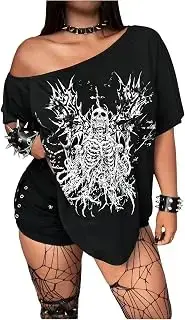
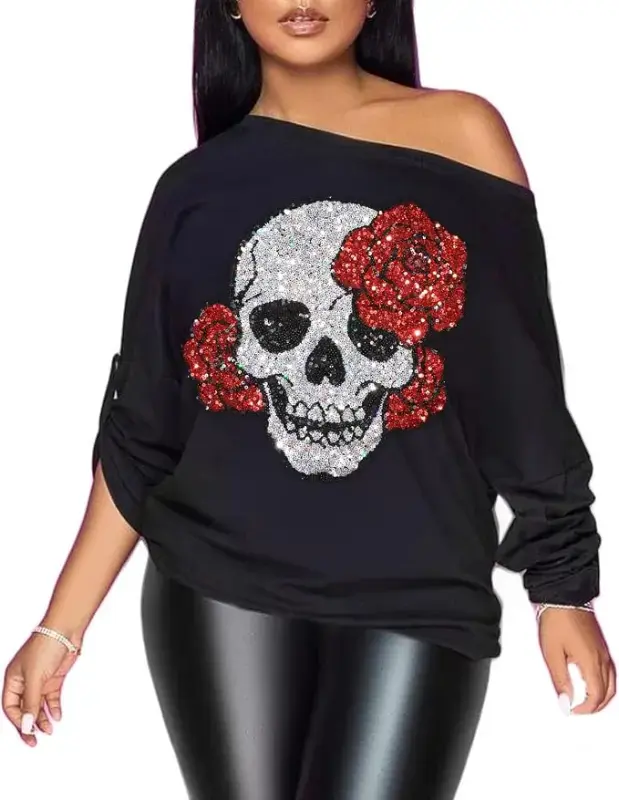
Compare fitted, straight, oversized and off-the-shoulder cuts separately. Measure a shirt you wear comfortably on a flat surface, recording chest width and length. A dropped shoulder or asymmetric neckline changes the construction; the model photo does not establish how the selected size will fit you.
Use the graphic to narrow the selection
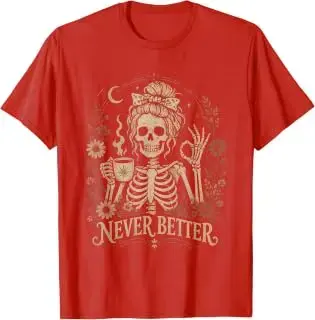
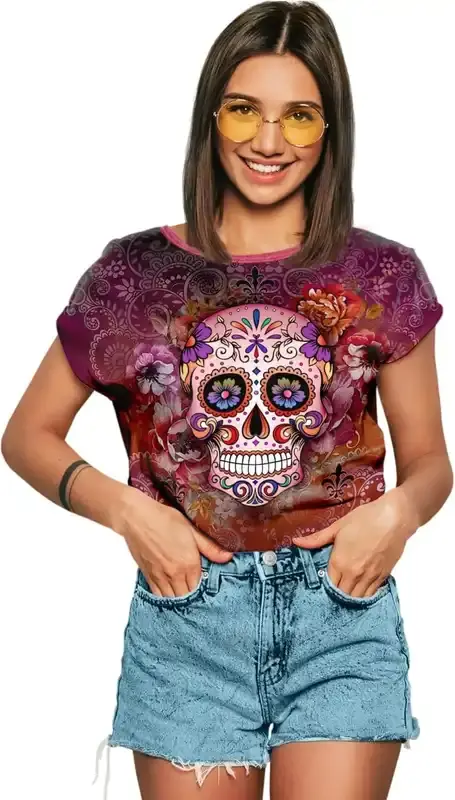
Floral skulls, sequins, lettering and band artwork are different choices. Compare the exact picture and variant, not just the first product photograph. The selection below uses the audience classification in the catalog; unisex options remain available in the main T-shirt guide.
Keep flat width and body circumference separate
For a shirt measuring 20 inches flat across the chest, twice that width is geometrically about 40 inches around the garment. This is our own example; it is not a body measurement or a guarantee of ease. Compare the seller’s method and allow for shape and the fit you want. Keep composition and print-care instructions for that exact variant.
A practical comparison worksheet
| Decision | Information to record | How to use it |
|---|---|---|
| Cut | Chest width, length and neckline | Compare with your own garment |
| Artwork | Exact selected print | Distinguish lettering, floral motifs and band references |
| Care | Variant-specific fabric and print instructions | Do not infer wash resistance |
Sources and method
Decalavera’s editorial criteria and examples use AI assistance and documentary checking. References support their specific cultural or technical context; they do not certify products or represent physical tests. Sources from other jurisdictions are not presented as US product certification.
How we prepare our guides ↗