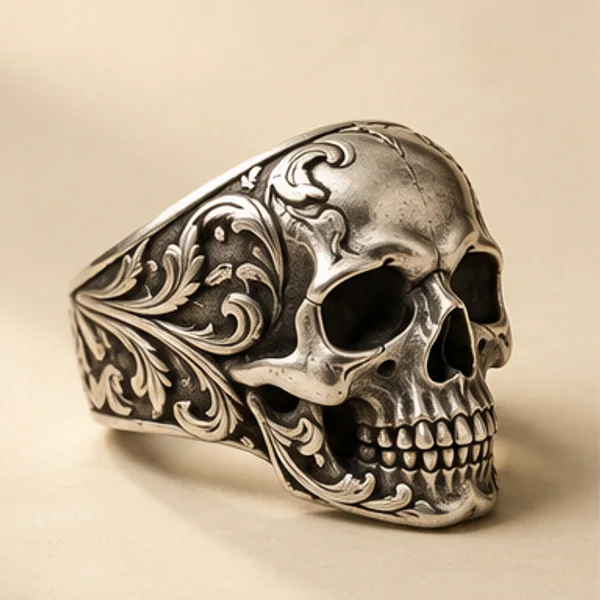
BUYING GUIDEChoose a skull ring by the exact model’s size chart, inside measurements, band width and stated composition. A large skull face and a wide band can affect comfort differently from a narrow ring in the same nominal size.
Read the guide ↗PRACTICAL GUIDEMeasure the inside diameter of a ring that already fits, excluding the metal band. Multiply the diameter by π for its approximate inside circumference, then use the exact product’s chart. This calculation is a geometry aid, not a universal sizing standard.
Read the guide ↗PRACTICAL GUIDECompare the body of a jewelry piece, its declared composition and its surface finish separately. A silver color does not identify a metal. A product description is useful documentation, but it is not an independent material test.
Read the guide ↗PRACTICAL GUIDEIdentify the base material and finish before cleaning skull jewelry. Follow the exact manufacturer’s instructions. A treatment intended for uncoated silver can alter deliberate darkening, a plated surface, paint, stones or adhesives.
Read the guide ↗BUYING GUIDECompare a skull pendant’s dimensions and weight with the chain length, clasp and stated composition. A large pendant on a short chain can wear differently from the same motif on a longer chain.
Read the guide ↗BUYING GUIDEChoose a skull bracelet by its usable inside measurement, closure and construction. A rigid cuff, a stretch-bead bracelet and a linked bracelet do not fit in the same way, even when their listing uses a similar size label.
Read the guide ↗BUYING GUIDECheck the size, declared weight, closure and quantity of skull earrings. A product photograph showing two pieces does not establish that the selected variant includes a pair. Verify the material of the part that contacts the ear.
Read the guide ↗